You have seen the trend pieces. "AEO is the new SEO." You have watched agencies swap terms on their websites overnight. The skepticism is earned. When every new acronym turns out to be the same service in different packaging, cynicism becomes a survival skill.
But dismissing AEO entirely means missing a real structural shift. The difference is not in the name. It is in how AI systems consume, evaluate, and surface information compared to traditional crawlers. This is not a cosmetic change in terminology. It is a fundamental change in the technology stack that determines who gets found and who gets ignored.
What the Skeptics Get Right and Wrong
The skeptics are right that most agencies selling AEO are doing rebranded SEO. They changed their homepage copy. They did not change their methodology. That is a legitimate criticism of the market, not of the discipline.
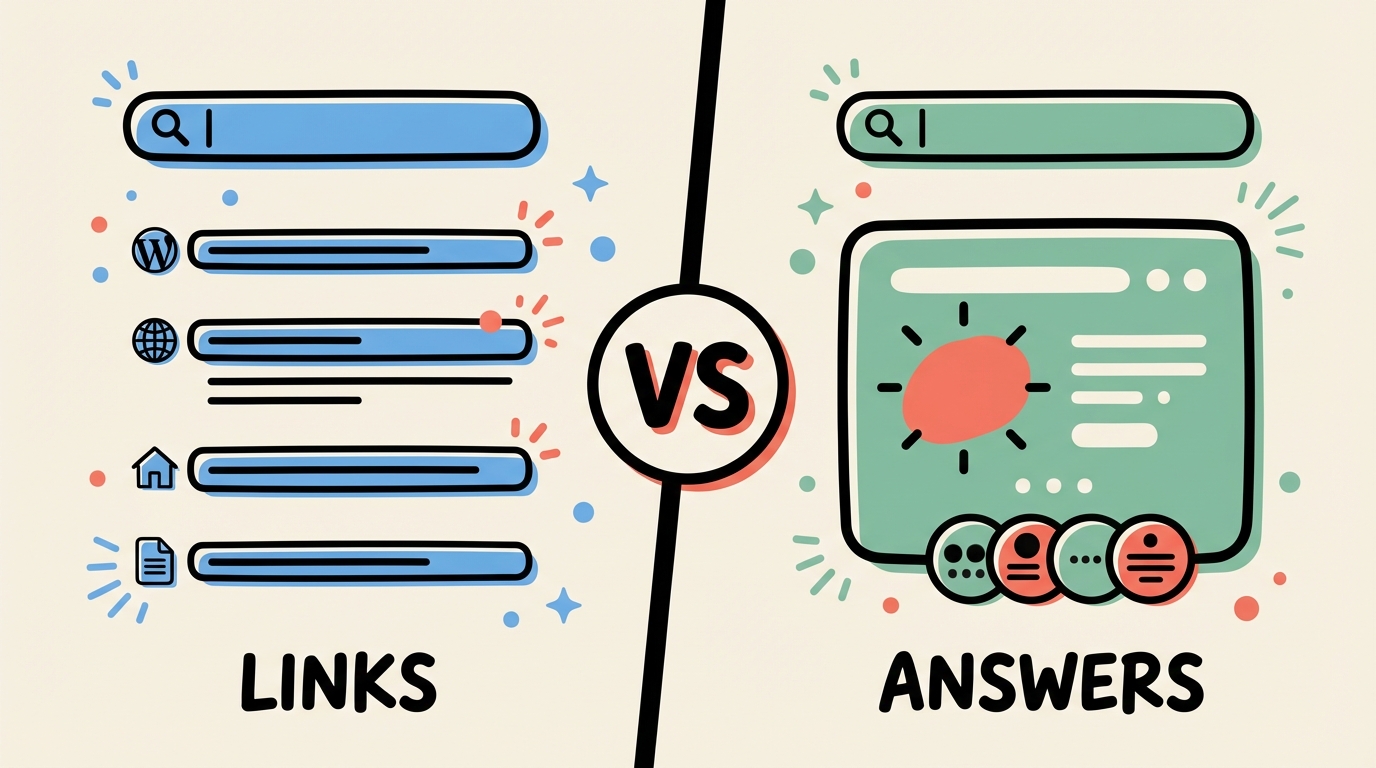
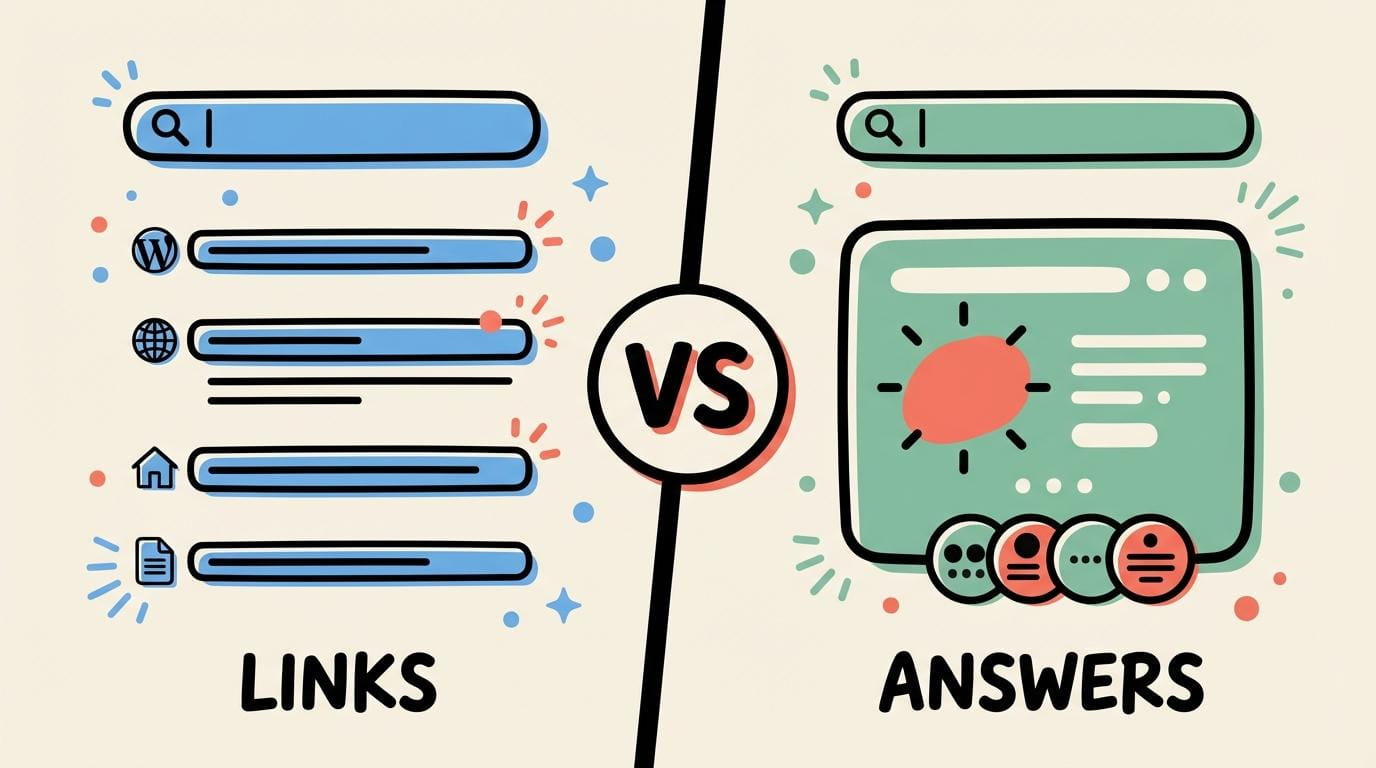
Where the skepticism breaks down is in assuming AI search behaves like Google search. It does not. Traditional search returns a list of links ranked by authority signals. AI search synthesizes an answer from multiple sources and presents it as a single response. These are fundamentally different retrieval architectures. One gives users a map and lets them drive. The other drives for them and drops them at a destination.
The problem is not that AEO is fake. The problem is that most people selling AEO are faking it. That distinction matters enormously if you are a brand trying to decide where to invest your visibility budget.
What Makes AEO a Distinct Discipline
Different Retrieval Mechanisms
Google crawls pages and ranks them by backlinks, relevance, and technical signals. AI models ingest content during training and retrieve it through embedding similarity and contextual relevance. Optimizing for one does not automatically optimize for the other. A page can rank number one on Google and never appear in a single AI-generated answer. The mechanics are simply not the same.
Entity Authority Over Domain Authority
In traditional SEO, domain authority is king. In AI search, entity authority matters more. AI models build internal representations of entities and their relationships. Your brand needs to be a well-defined entity with clear topical associations. Practitioners focused on ai engine optimization build entity graphs rather than backlink profiles. Think of it as the difference between having a high credit score and having a well-documented identity. Both matter, but in very different systems.
Content Structure for Machine Extraction
SEO content targets human readers who scan headings and click links. AEO content targets extraction algorithms that pull definitive statements. The writing style, structure, and information architecture differ significantly. A paragraph optimized for a human skim is often the worst paragraph for an AI extraction. Clarity, specificity, and declarative sentence structures become the new optimization levers.
Citation Patterns Replace Click Patterns
SEO success means ranking on page one and earning clicks. AEO success means being cited in AI-generated answers. These are different outcomes requiring different measurement systems and optimization strategies. Your analytics dashboard needs a new column entirely.
Training Data Influence
AI models form opinions during training. Content that exists in training data shapes how models understand topics permanently. SEO focuses on real-time indexing. AEO must account for both training data influence and retrieval augmentation. This means publishing authoritative content consistently over time, not just optimizing existing pages before a campaign.

Practical Steps to Move Beyond Rebranded SEO
Audit your AI visibility separately from Google rankings. Query ChatGPT, Perplexity, and Gemini about your core topics. Note where you appear and where competitors appear. This baseline reveals gaps that SEO tools will never show you. Do this quarterly, because AI models update and your visibility can shift without any change on your end.
Build structured content around entities, not just keywords. Map the entities in your space. Define your brand's relationship to those entities. Create content that strengthens those connections explicitly. A brand that is clearly associated with a specific topic in multiple authoritative sources becomes a reliable citation for AI systems.
Implement schema markup beyond the basics. FAQ schema is table stakes. Invest in organization schema, product schema, and custom entity relationships. Agencies delivering real ai engine optimization treat structured data as infrastructure, not an afterthought. Schema is the language AI systems use to confirm what they already believe about your entity.
Measure AI-specific outcomes. Build tracking for AI referral traffic. Monitor brand mentions in AI-generated content. Create dashboards that separate AI visibility from traditional search visibility. If you are measuring AEO success with Google Search Console alone, you are flying blind over the most important new territory in search.
Update content for extractability. Review your top pages. Add clear, concise statements that AI models can pull directly. Structure information in ways that make extraction unambiguous. Replace vague introductory paragraphs with sharp, definitive claims. AI systems reward confidence and clarity over hedged, nuanced prose.
Consider your publishing frequency and source diversity. AI systems that rely on retrieval augmentation pull from a wide variety of sources in real time. That means your brand needs to appear not just on your own website, but across third-party publications, industry directories, and authoritative forums. A single well-optimized page is far less powerful than a consistent presence across a diverse ecosystem of sources.
The Cost of Sitting on the Sideline
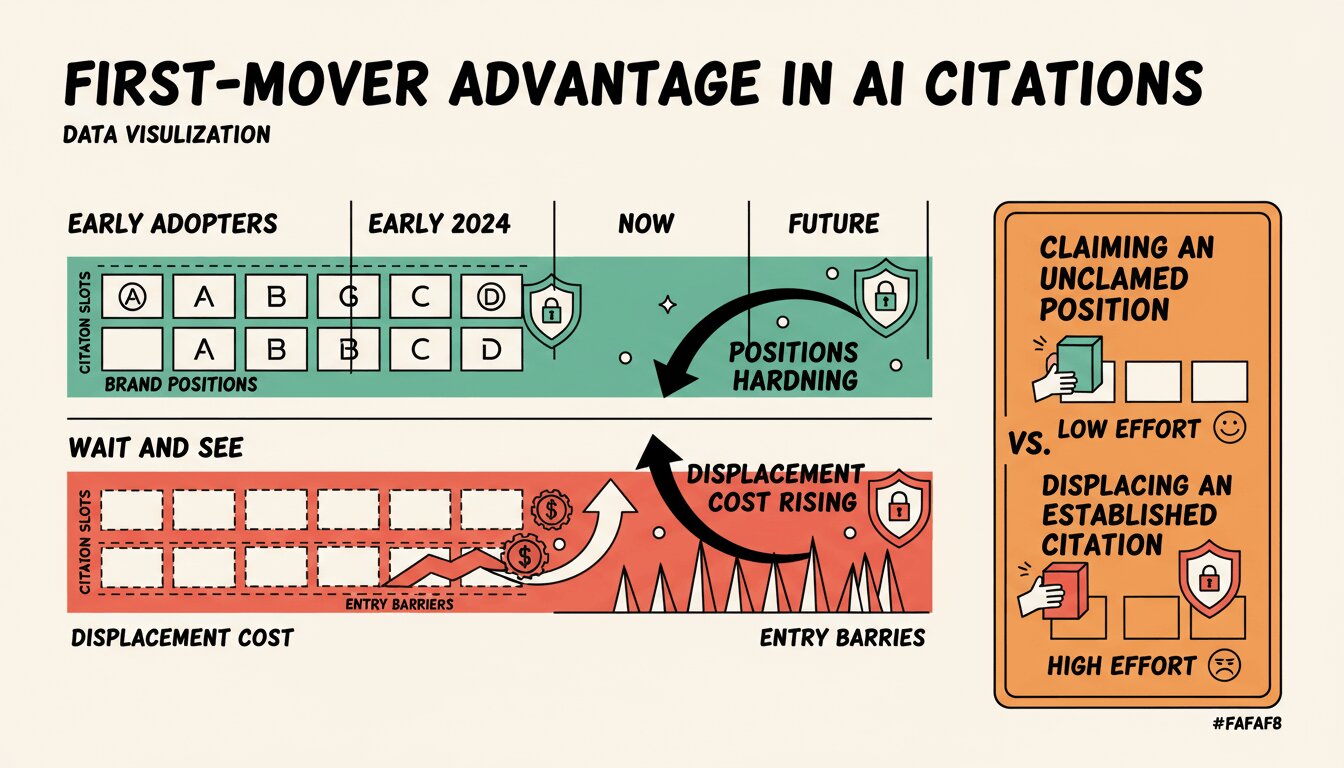
While SEO professionals debate whether AEO is legitimate, companies that committed early are already showing up as default citations in AI responses. Those positions are hardening. Displacing an established AI citation requires significantly more effort than claiming an unclaimed one. Early movers in AI visibility are earning the same kind of compounding advantage that early SEO adopters earned in the mid-2000s.
The discipline is real even if most practitioners are not. The brands that separate genuine AEO methodology from rebranded SEO theater will own the next generation of search visibility. The ones that wait for the market to mature will find themselves fighting for second-tier citation slots.
You can afford to be skeptical about vendors. You cannot afford to be skeptical about the shift itself. AI search is not replacing Google tomorrow. But it is already shaping how your buyers research, compare, and decide. The question is whether your brand shows up in that process or whether a competitor fills that space by default. Skepticism is a useful filter for vendor selection. It is a dangerous posture for strategic planning.